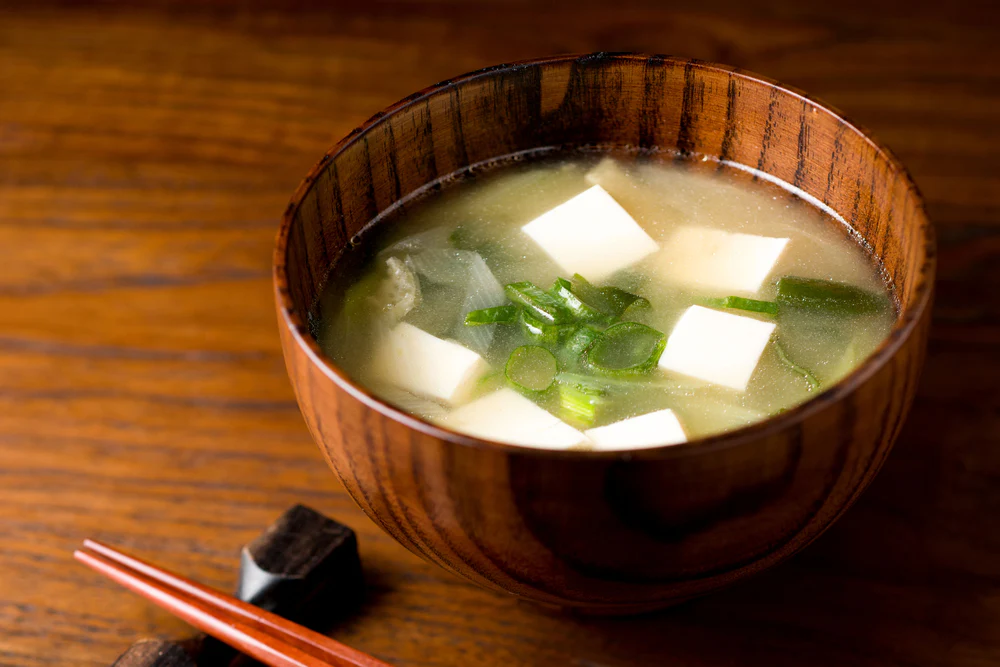
Miso soup begins with a few ordinary ingredients: broth, miso paste and something to put in the bowl. The useful questions are how much paste to add, when to add it, and which ingredients to cook first.
This guide focuses on making a simple bowl. If you have not bought miso yet, use our first-miso buying guide to compare styles, ingredients and labels.
What is miso soup?
Miso soup is a Japanese soup seasoned with fermented miso paste. Dashi is a common broth, and additions can include tofu, vegetables, mushrooms or wakame. Miso itself varies by its ingredients and how it is made, so two pastes can produce quite different bowls.
A simple beginner ratio
A useful starting point is about 1 tablespoon of miso per 1 cup (240 ml) of prepared broth. Hikari Miso’s basic soup recipe uses 3 tablespoons with 720 ml of water and dashi. This is a starting ratio, not a fixed rule for every product. [2]
Begin with less if your broth is already salty. Stir, taste, and add a little more only if needed. A paste with added dashi may have different preparation directions, so read its package before adding separate stock seasoning.
What you need
- Prepared dashi or another broth that suits your meal
- Miso paste, measured lightly at first
- One or two additions, such as tofu and green onion
- A small saucepan and a ladle or bowl for loosening the paste
For a plant-based bowl, check both the miso and the broth. Some dashi-containing misos use fish ingredients. A plain white or light-colored rice miso described as mild can be an approachable starting point; awase means blended miso and is not always mild. Color alone does not tell you the sodium level.
How to put the bowl together
- Prepare the broth according to its recipe or package directions.
- Add ingredients that need cooking, such as sliced daikon, carrots or mushrooms, and simmer until cooked. Add delicate ingredients later so they keep their shape.
- Turn off the heat. Put a small amount of hot broth in a ladle or bowl and stir the miso into it until smooth.
- Stir the loosened miso back into the pot. Taste the soup and adjust gradually.
- Finish with green onion if you like, and serve while warm.
Adding miso near the end helps keep its aroma. Hikari and Marukome both describe turning off the heat before adding it. This is a culinary technique, not a claim about a health benefit. [3] [4]
Simple variations
- Tofu and green onion: a straightforward place to begin.
- Mushrooms and cabbage: simmer the vegetables before adding the miso.
- Daikon and carrot: slice evenly and allow time for them to soften.
- Potato and onion: cook the potato through before finishing the soup.
A quick check before serving
- Are the vegetables cooked to your liking?
- Has the miso dissolved, with no large lumps?
- Have you tasted before adding more paste or salt?
- Does the broth and miso ingredient list suit everyone eating?
If the soup tastes too strong, dilute it with a little unsalted broth or water. For a fuller meal, serve it with rice and a simple side using the ichiju sansai meal structure.
This guide is about food culture and cooking. It is not medical advice.